Quick commerce is now a large share of online FMCG orders
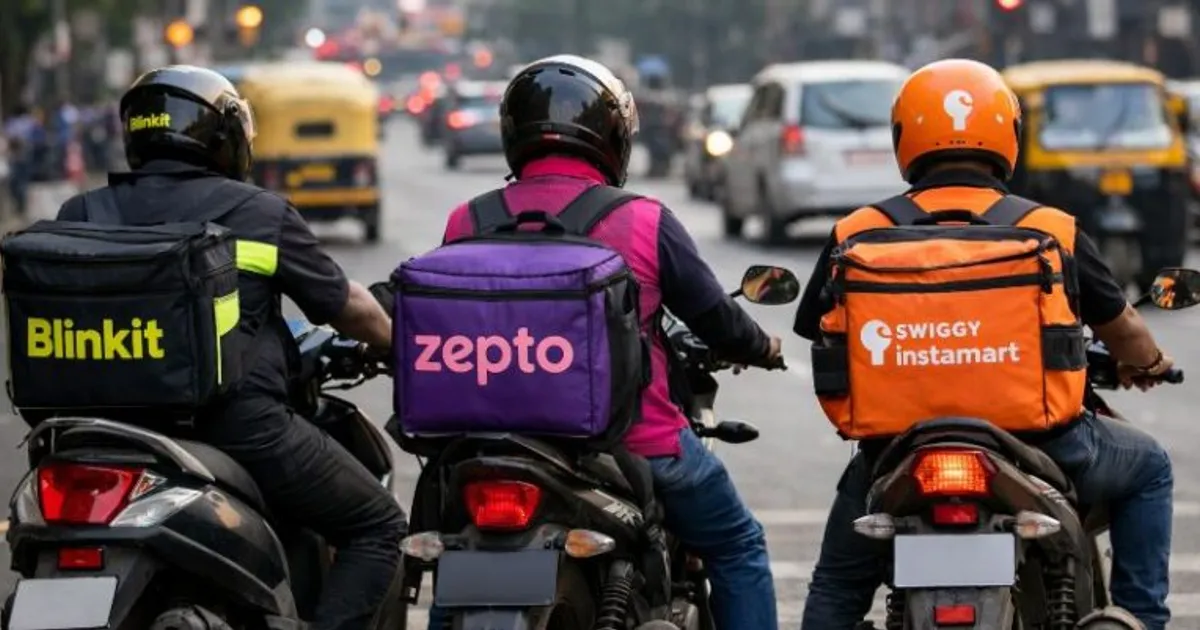
Redseer puts quick commerce gross merchandise value at about ₹11,000 crore for January 2026 alone, roughly double a year earlier, on about 7.8 million orders a day. It projects 40 to 45 percent annual growth and about 10 percent of branded retail by 2030. Blinkit holds about half the market, Zepto and Instamart about a quarter each. The combined dark store network reached 5,026 locations in May 2026, up 48 percent in a year. For a D2C brand in snacks, beverages, personal care or supplements, this is now a channel you cannot ignore. The question is whether the maths works for you.
How it works for a D2C brand
You do not ship to the buyer. You ship bulk cartons, usually 50 to 200 units per dark store, to micro warehouses across Delhi NCR, Mumbai, Bengaluru, Hyderabad and Pune. The platform delivers to the shopper in about 10 minutes. Returns run under 3 percent, against 20 to 35 percent on a marketplace like Meesho, and settlement runs on a weekly business cycle. The trade is clear. You give up margin for near zero return losses and fast local sales velocity.
What each platform costs
None of the three publishes its terms, and the figures quoted online conflict, sometimes by more than ten percentage points for the same platform. Blinkit has also moved to an inventory led model, buying stock from brands and selling it on, so expect a negotiated margin rather than a published commission. Treat every figure below as a reported range, and get your own numbers in writing before you commit.
| Platform | Reported total cost |
|---|---|
| Blinkit | 35 to 50 percent of MRP |
| Zepto | 30 to 45 percent of MRP |
| Instamart | 35 to 50 percent of MRP |
The stack behind those totals is commission, 18 percent GST on the commission, inbound logistics at 3 to 5 percent, on platform ads, brand funded promotions, and damage or expiry write offs at 2 to 5 percent of inventory. Entry figures reported in practitioner guides are Blinkit listing at about ₹25,000 per SKU per state, returned as ad credits, Zepto vendor packages at ₹5 to 6 lakh, and Instamart quarterly brand packs at ₹8 to 10 lakh.
The margin test that decides it
Published practitioner guidance puts the working threshold at roughly 55 to 70 percent gross margin, because the whole deduction stack lands before your product cost. For brands with gross margins below 55 to 60 percent, the channel costs more than it earns at usual startup volumes.
- Take the MRP, then subtract the commission, the GST on the commission, inbound logistics, ads as a share of gross merchandise value, and a write off provision.
- What is left is your net margin per unit. If it is negative at 2,000 monthly orders, the channel is not viable at your current margin structure.
- Run the test per SKU per city, monthly, and judge growth on contribution after all platform deductions, not on topline.
The brands that win on quick commerce are almost always the ones with premium positioning and margins that survive the full cost stack.
Which platform first
Blinkit is the largest, with about 2,243 dark stores and 331 million orders in the quarter to June 2026. It fits snacks, beverages and personal care best, and it now buys stock under its inventory led model. Zepto is the most open to emerging and regional brands, with about 1,139 dark stores, but it expects 95 percent plus fill rates before preferred onboarding. It fits health, D2C brands and beverages. Instamart runs a discount heavy model that drives volume but compresses margins, and it fits groceries and food best, so it is the hardest for a premium D2C product. Start with one platform, your top 3 best selling SKUs, and high density metro pincodes.
Launch checklist
- Run the margin test per SKU and confirm gross margin clears 55 percent after the full stack.
- Get an FSSAI licence, with the 14 digit number on the packaging, and keep at least 60 percent shelf life remaining at inwarding.
- Register an Additional Place of Business for each state you want to operate in on Blinkit.
- Build packaging that survives rapid handling in a dark store and a 10 minute delivery ride.
- Plan weekly replenishment, because Zepto expects 95 percent plus fill rates and a SKU that fails to sell in 30 to 45 days faces holding fees or reverse logistics.
- Set an ad wallet budget, usually ₹25,000 to ₹50,000 to start, and budget 10 to 15 percent of gross merchandise value for on platform ads.
- Apply through the Zepto Vendor Hub or Blinkit partner registration, with your D2C sales data ready, because category managers respond to growth and repeat rates.
The channel rewards brands with margin to spare and punishes brands that chase the topline.
If your gross margin is under 55 percent, quick commerce costs more than it earns at usual startup volumes. Fix the margin first, or pick the SKUs that carry it.